
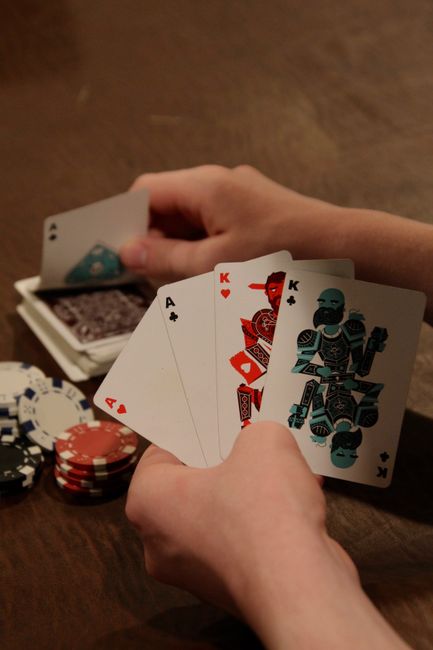
Ask ten gamblers what decides their fate and eight will say luck. The other two will tell you it's the house edge, which sounds smarter but isn't much more useful. The house edge tells you what happens to a million bets, not what happens to you tonight. And the gap between those two things is where every real decision about bankroll, game choice, and discipline actually lives.
I've spent years watching players make the same handful of avoidable mistakes—not because they're reckless, but because nobody ever explained the mechanics behind the numbers. So let's fix that.
Volatility: The Number You're Actually Feeling
Two slot machines can share the exact same RTP and produce wildly different experiences. That's because RTP describes the long-run return, while volatility (or variance) describes how the money comes back to you. A 96% RTP game with low volatility dribbles wins back steadily. A 96% RTP game with extreme volatility might swallow three hundred spins before dropping one enormous multiplier.
Neither is "better." They suit different bankrolls and different temperaments.
- Low volatility (think Starburst or most 10-line classics): frequent small wins, gentler swings, good for stretching a session or hitting bonus requirements.
- Medium volatility: the sweet spot for most recreational players—regular hits with occasional decent multipliers.
- High volatility (think Money Train 2, San Quentin, most "Megaways" titles): long dry spells punctuated by huge potential payouts. You need a bankroll of at least 200–300 bets to survive the drought.
Here's the practical takeaway: if you have $100 and play $1 spins on an extreme-volatility game, you are not gambling on winning—you're gambling on surviving long enough to hit the rare payout. Do the maths before you press spin.
Why Game Selection Beats "Hot Streak" Thinking
Table game maths is brutally honest once you look at it side by side. Per $100 wagered, here's roughly what the house expects to keep:
- Blackjack with basic strategy: $0.50–$1.00
- Baccarat (banker bet): about $1.06
- European roulette: $2.70
- American roulette: $5.26
- Slot machines: $2.00–$8.00, depending on RTP
- Keno and most lottery-style games: easily $25–$35
That's not a reason to avoid slots. It's a reason to know which category you're in. A player grinding American roulette on a small bankroll is bleeding twice as fast as someone at the European table, and the fix costs nothing but attention. Readers looking for specifics may like สล็อต.
On slots specifically, RTP is often published in the game's help menu or listed on the operator's "game info" page. Look for titles above 96%. The difference between 94% and 97% over a thousand spins is substantial—about $30 per $1,000 wagered. Over a year of regular play, that's a holiday.
Bankroll Rules That Actually Hold Up
Most bankroll advice fails because it's written for people who already have discipline. Real rules need to work when you're tired, slightly tilted, and one good hit away from "getting it all back."
- Separate your money. Decide a monthly figure you'd be comfortable losing entirely—never rent, never emergency savings—and move it into a dedicated account or prepaid card. When it's gone, the month is over.
- Set a loss limit and a time limit. Write both down before you start. Notifications on your phone work better than willpower.
- Size bets relative to your bankroll, not your mood. A common guideline for slots is 1–2% of bankroll per spin; for table games, 1–5% per hand.
- Don't chase with bigger bets. Increasing stake to recover losses raises variance exactly when your bankroll can least absorb it.
- Cash out visible progress. If you're up 50% on your starting amount, withdraw half. Locked-in gains are the only wins you truly keep.
These aren't glamorous. They're also the difference between gambling as entertainment and gambling as damage control.
Poker Is a Different Animal—Don't Play It Like a Slot
In casino games you play against a fixed mathematical structure. In poker you play against people, and the rake is your only permanent opponent. That single fact changes everything.
Cash game poker is beatable for a skilled player. Slots are not, in the long run, for anyone. So if you're a competent poker player, understand that your edge exists—but it's thin and fragile. It disappears the moment you play above your bankroll, tilt off three buy-ins after a bad beat, or sit at a table full of sharks because the table looked fun.
Bankroll management in poker is stricter than in casino games, and for good reason:
- Cash games: at least 20 buy-ins for the stake you play (30+ is safer).
- Tournaments: 50–100 buy-ins, because variance in MTTs is brutal.
- Move down when you drop below your threshold—not up to "get it back."
One more thing: stop playing when you're angry. Your decisions in a tilted state are measurably worse. Any professional will tell you that. Any amateur will nod and then ignore it.
The Bonus Trap Nobody Warns You About
Welcome bonuses look like free money. Read the terms and they become a math problem.
The key figure is wagering requirement. A $100 bonus with a 40x requirement means you must wager $4,000 before withdrawing any of it. If you play a game contributing 100% to wagering at 3% house edge, your expected loss over those $4,000 in bets is $120. That bonus is worth less than it appears—and may be worth nothing at all if the bonus is deducted from your winnings, if game contributions vary, or if you hit the maximum cashout limit.
Bonuses aren't inherently bad. They can extend your playtime, which is genuinely what many players want. But treat them as entertainment credit with strings, not as free cash. Check three things before claiming: the wagering requirement, the maximum cashout, and the game contribution table.
Paper Losses, Real Lessons
The best lesson in gambling comes from tracking yourself honestly for a month. Log every deposit, every withdrawal, every session length. At the end, compare what you actually spent against what you thought you were spending. Most players are shocked by the gap.
None of this is meant to talk you out of playing. Casinos and slots and poker are enjoyable if you go in with open eyes, a defined budget, and a realistic understanding that the maths favors the operator over time. The edge belongs to the house—permanently, structurally, and by design. Your leverage is in choosing better games, sizing bets sanely, avoiding tilt, and treating every session as something you pay for rather than something you extract.
Play like the person who checked the RTP, set the loss limit, and walked away on schedule. That's not the fun-sounding version of gambling. It's the version you can actually keep doing.


Zhon Andarson
Coding is used in almost all aspects of life and work now, be it directly or indirectly. It’s not just for companies in the tech sector. “An increasing number of businesses rely on computer code,
Andro Smith Doe
Coding is used in almost all aspects of life and work now, be it directly or indirectly. It’s not just for companies in the tech sector. “An increasing number of businesses rely on computer code,